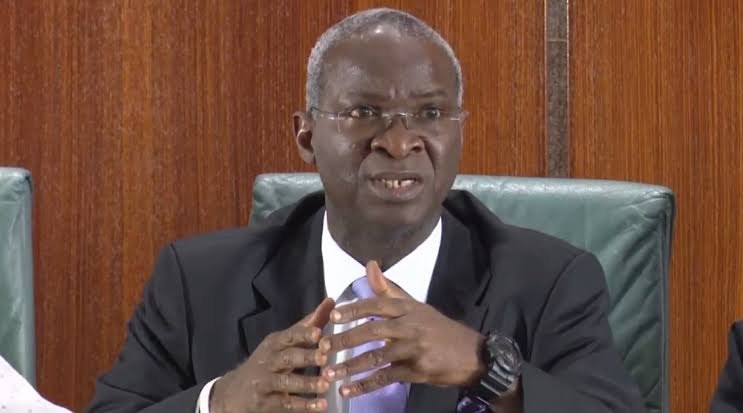
Babatunde Fashola, former Minister of Works, stated that Nigerian workers deserve appropriate modifications to cope with the country’s rising cost of living.
Fashola stated this in a piece titled, ‘Minimum Wage Review – My Take Away’.
He stated, “When cost of living rises as they have now, the lowest and the highest income earners are impacted to varying degrees and therefore deserving of reasonable adjustments whether they earn wages or salaries.”
The former Lagos State governor faulted Section 4(1)(b) of the National Minimum Wage Act 2019 which exempted “an establishment employing less than 25 persons” from being bound by the provisions of the Act to pay the minimum wage.
The former minister stated that the exemption of such companies “raises serious doubts about whether we have enacted a minimum wage Act if small businesses with only 25 employees but employ the greatest number of the most vulnerable people are exempt from the law as currently enacted.” So, who exactly is the law protecting?
Fashola, a Senior Advocate of Nigeria (SAN), said item 34 of the 1999 Constitution as amended in the Exclusive Legislative list confers power on the National Assembly to prescribe a national minimum wage for the Federation and not a monthly salary.
He said though wages and salaries are common methods of compensation open to the employer, the former is a fixed annual amount, payable at weekly, bi-weekly or monthly subject to agreement, while the latter refer to payment based on an hourly rate and the number of hours the employee works.
“Therefore, it seems obvious from this definition that by making a law in Section 3(1) of the Minimum Wage Act that the minimum wage of N30,000 shall be paid monthly, the NASS may have acted unconstitutionally by legislating on a SALARY (monthly payment) when they only have power to legislate on WAGES, an hourly payment.
“This is important while the conversation on minimum wage is being had in 2024 because in Section 3(4), the minimum wage “shall be reviewed in line with the provisions of this Act” which includes Section 3(1) that has prescribed a monthly amount instead of an hourly wage.”
“Of course, if and when we decide as a country on the implementation of a proper minimum wage, we must then design a formula to review salaries of those who do not earn wages in order to assist them deal with cost-of-living challenges.
“This may yet be the most fruitful outcome of the dilemma of appropriate employee compensation as it may lay the foundation for national productivity, wealth creation and prosperity. The opportunity is too big to miss or waste,” he said.
The former governor advised specialists in labour law and compensation issues to put their thinking caps on and look for assistance from the world’s top universities.