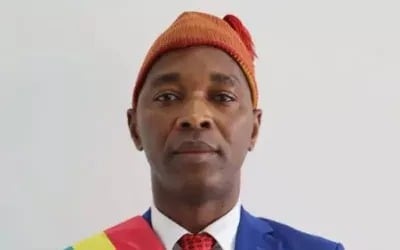
Nigeria has offered asylum and protection to Fernando Dias da Costa, Guinea-Bissau’s opposition presidential candidate, following reported threats to his life in the aftermath of last week’s military coup.
The coup was declared by soldiers on November 26, just days after the country’s presidential election in which both incumbent President Umaro Embaló and his challenger, da Costa, claimed victory before official results were announced.
Former Nigerian President Goodluck Jonathan, who led the ECOWAS observer mission to the poll, questioned the legitimacy of the coup, suggesting it may have been orchestrated by Embaló himself. Nigeria condemned the takeover and called for an immediate return to constitutional rule.
In a letter dated November 30 to ECOWAS Commission President Omar Touray, Nigeria’s Foreign Affairs Minister, Yusuf Tuggar, confirmed that President Bola Tinubu had approved asylum for da Costa within the Nigerian embassy in Bissau. Tuggar explained that the move was a proactive measure to safeguard da Costa’s life amid imminent threats.
“The decision to accommodate Mr. Da Costa within the Nigerian premises underscores our firm commitment to safeguarding the democratic aspirations and the sovereign will of the good people of the Republic of Guinea-Bissau,” the letter read. Tuggar also requested ECOWAS to mandate its Stabilization Support Mission in Guinea-Bissau to provide additional protection.
Alkasim Abdulkadir, special assistant on media to the foreign minister, confirmed the letter’s authenticity on Monday, stressing that Nigeria’s intervention was consistent with its responsibility to promote peace and stability in West Africa. He said the decision was taken “in the broader interest of de-escalation” and aligned with ECOWAS principles.
Following the coup, ECOWAS convened an emergency virtual summit and suspended Guinea-Bissau from the regional bloc until constitutional order is restored. ECOWAS Chairman and Sierra Leonean President Julius Maada Bio announced that he had engaged in talks with Guinea-Bissau’s military leaders, reaffirming the bloc’s commitment to reinstating democratic governance.
Guinea-Bissau has a long history of political instability and military interventions since independence in 1974. The latest crisis erupted after the November 23 election, which triggered tensions when both Embaló and da Costa claimed victory. On November 26, soldiers seized government institutions, suspended the electoral process, closed borders, and imposed a curfew.
By November 27, the junta, calling itself the High Military Command for the Restoration of National Security and Public Order, appointed Horta Nta Na Man as transitional president for one year. The military later reopened the borders to ease economic strain and humanitarian concerns.