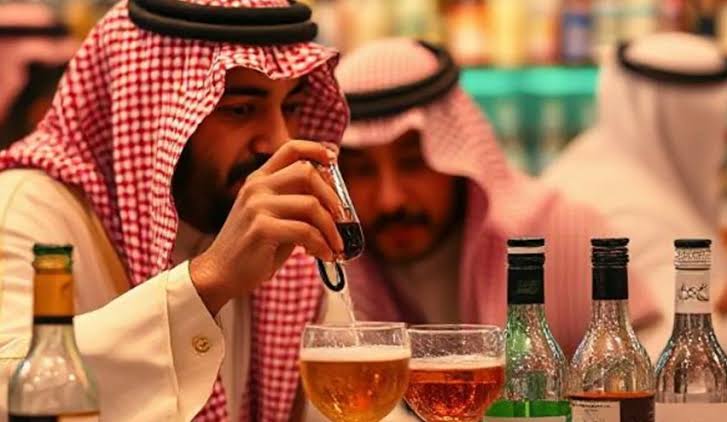
Saudi Arabia has taken one of its most surprising social steps in decades, quietly easing its long-standing ban on alcohol and allowing wealthy foreign residents to legally purchase alcoholic beverages for the first time in 73 years.
The discreet change, which began in Riyadh’s elite Diplomatic Quarter, marks another bold turn in Crown Prince Mohammed bin Salman’s sweeping Vision 2030 reform agenda — and could signal even broader changes ahead.
A Silent Opening in Riyadh’s Diplomatic Quarter
According to reports by the BBC, a tightly controlled alcohol outlet first opened in January 2024 inside Riyadh’s Diplomatic Quarter. At launch, access was limited strictly to non-Muslim diplomats.
By the end of 2025, Saudi authorities quietly expanded eligibility to include affluent non-Muslim expatriates living in the kingdom, a move that dramatically widens legal access without any official public announcement.
Analysts describe the quiet rollout as intentional, reflecting the government’s cautious approach to sensitive cultural shifts.
Who Can Legally Buy Alcohol in Saudi Arabia?
Only wealthy, non-Muslim expatriates currently qualify under the new rules.
To be eligible, buyers must:
- Hold a Premium Residency permit, which costs 100,000 Saudi riyals per year, or
- Earn a minimum monthly salary of 50,000 Saudi riyals
Customers must present a residence ID card confirming their religion and residency status. Those without Premium Residency must also submit a company-issued salary certificate.
Foreign tourists remain excluded from the scheme.
Strict Security, Discreet Entry, Premium Prices
Visitors to the store say security is tight and discretion is paramount.
Mobile phones are sealed in tamper-proof bags before entry, and queues can stretch for over an hour. Inside, shelves are described as well-stocked with spirits, wines, and liqueurs, though prices are significantly higher than global averages.
One British executive said a bottle of Johnny Walker Black Label costs about $124, nearly double Western market prices.
Purchases are controlled through a points-based monthly quota system that reportedly allows customers to buy dozens of litres of spirits. Diplomats are said to receive discounted pricing.
No Official Announcement — Only Word of Mouth
The Saudi government has not formally confirmed or publicised the policy change.
Many buyers say they discovered the location through private messaging or shared Google Maps pins. One Asian expatriate said a friend simply sent the address without any official notice.
Sebastian Sons, a senior researcher at German think tank Carpo, noted that Saudi Arabia often advances cautiously on socially sensitive reforms.
“They are willing to go two steps forward and one step back, if necessary. With alcohol, it could be the same,” he said.
Alcohol Has Existed Quietly for Years
Although alcohol has been officially banned under Islamic law, underground consumption has long existed in Saudi Arabia.
Homemade brews, smuggled imports, and embassy supplies have sustained demand for decades, often at high black-market prices. The new policy effectively shifts part of this activity into a regulated, controlled environment.
Economic Pressures Driving Reform
The timing of the move aligns with mounting economic pressures and Saudi Arabia’s push to attract foreign capital and high-skilled professionals.
With energy markets under strain and public spending tightening, the kingdom has scaled back some mega-projects such as the Neom futuristic city while easing restrictions on foreign property ownership and investment.
Saudi Arabia has also poured billions into tourism, entertainment, and international sporting events to diversify its economy.
Tourism Minister Ahmed Al Khateeb said in November 2025 that the country aims to double tourism’s contribution to GDP by 2030.
Vision 2030 and What Comes Next
Tourism sits at the heart of Saudi Arabia’s Vision 2030 strategy.
In 2024 alone, the kingdom welcomed nearly 30 million international visitors, with more than half arriving for non-religious purposes. The target is 70 million international tourists annually by 2030.
Experts believe the controlled alcohol sales experiment could eventually expand to tourists, though authorities have given no indication of when or how that might happen.
For now, access remains strictly limited to wealthy expatriates — but the message is clear: Saudi Arabia’s social landscape is evolving faster than ever.