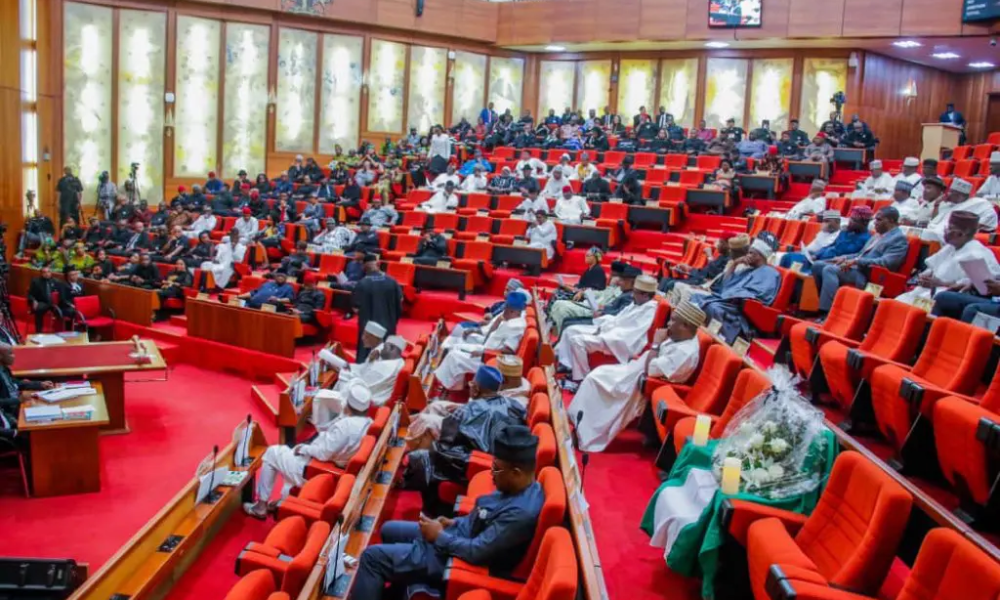
the Nigerian Senate has bowed to overwhelming public pressure. On Tuesday, February 10, 2026, lawmakers officially rescinded their controversial rejection of mandatory electronic result transmission, re-introducing a version of the clause into the Electoral Act (Amendment) Bill 2026.
The session became rowdy early on when Senator Enyinnaya Abaribe moved for an individual “division” vote to ensure transparency, a move that met with fierce resistance from some members of the majority party. However, as the #OccupyNASS protesters chanted outside and the NLC’s strike threat loomed large, the chamber ultimately pivoted.+1
The New Compromise: E-Transmission + Manual Backup
The Senate approved a revised Clause 60, which now mandates that results must be transmitted electronically from polling units to the IReV portal. However, they introduced what they call “technical safeguards”:
- The “Hybrid” Rule: While electronic transmission is now the primary method, the manual Form EC8A remains the “ultimate legal document” in cases where network failure or technical glitches occur.
- The Network Caveat: INEC still retains the power to determine if a specific area has the telecommunications coverage necessary for real-time transmission, a provision critics label a “loophole for manipulation.”
- Harmonization Committee: A 12-member committee, chaired by Senator Simon Lalong, has been set up to harmonize this version with the House of Representatives’ bill before it heads to President Tinubu’s desk.
While civil society groups have cautiously welcomed the reversal, many remain wary of the “manual backup” clause, fearing it could be used to override electronic data during disputes.