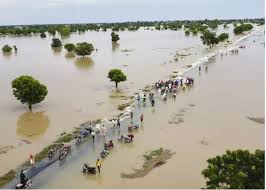
The Federal Ministry of Environment has issued an urgent flood warning for 10 states, alerting residents to prepare for heavy rainfall and potential flash flooding between April 8 and April 12, 2026.
Contents
The notice, released yesterday by the National Flood Early Warning Centre, identifies specific communities across the country that are at high risk due to the current intensification of the rainy season.
States and Locations at Risk
The government has flagged the following areas for immediate precautionary measures:
- Lagos: High risk of flash flooding in Lagos Island, Ikeja, Badagry, Ikorodu, and Epe. Low-lying communities like Agiliti, Agboyi, Itowolo, and Ajegunle are being closely monitored.
- Anambra: Atani, Iyowa Odekpe, Odekpe, and Onitsha.
- Imo: Owerri, Okigwe, Nworievbi, and Otoko.
- Taraba: Donga, Lau, Serti, Takum, and Yorro.
- Cross River: Ikom, Edor, and Itigidi.
- Other States: Ebonyi (Afikpo, Nkalagu), Ogun (Ayetoro, Ilaro), Benue (Igumale), Delta (Oko Anara), Abia (Umuahia), and Rivers (Port Harcourt).
- Yobe & Borno: While these northern states often face shorter seasons, they are currently on alert for “above-normal” intensity during the predicted window.
The “Double-Edged” Climate Outlook
According to the 2026 Seasonal Climate Prediction by NiMet, the current weather pattern is influenced by a transition from a weak La Niña to a neutral phase.
- The Forecast: Lagos and surrounding states are expected to see “above-normal” rainfall, with the season likely lasting until December 2026.
- Flash Flood Triggers: Authorities warned that rising lagoon levels and high tidal movements may “lock up” drainage discharge points, causing water to back up into streets and homes.
- Soil Saturation: Unusual rains in January and February mean the soil is already saturated in many regions, making flash floods occur much faster than in previous years.
Precautionary Steps for Residents
The Ministry and state agencies like NEMA have urged the following actions:
- Relocation: Residents in flood plains (e.g., Owode, Iwaya, Makoko, and Ijora) should be prepared to relocate to higher ground if water levels rise.
- Drainage Maintenance: Clear all gutters and neighborhood drains immediately; do not dump waste into canals.
- Travel Safety: Avoid driving through standing water, as road surfaces may be weakened by previous heatwaves and current saturation.
- Property Check: Homeowners are advised to create “green zones” in their compounds to allow water to soak into the ground rather than relying entirely on concrete or interlocking stones.