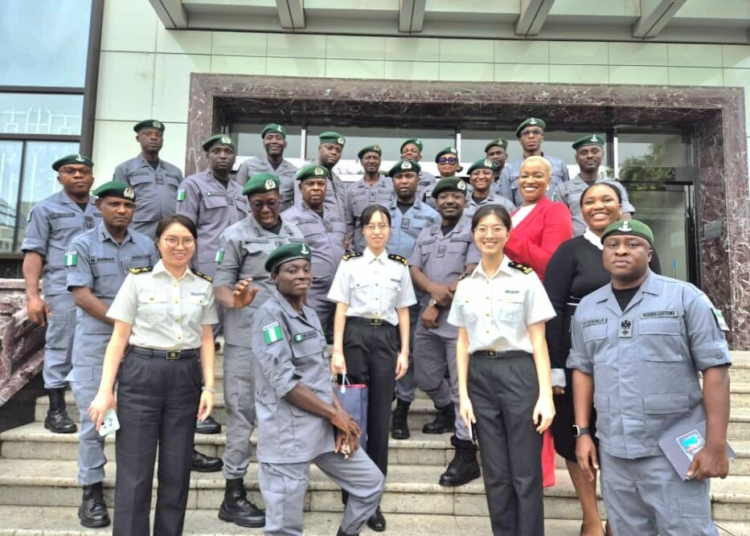
Nigeria’s import-export landscape is undergoing a massive, high-tech transformation that is about to send shockwaves through our borders. In a major strategic realignment following high-level meetings at the Customs Headquarters on Wednesday, May 20, 2026, the Nigeria Customs Service (NCS) has declared an absolute lockdown on illicit economic activities. The agency is aggressively tightening border enforcement while simultaneously laying down a digital red carpet for billions of dollars in legitimate trade under Nigeria’s deepening economic partnership with China.
This is not the standard, slow-moving bureaucratic border protocol. As bilateral trade between the two giants clears the multi-billion dollar mark, Nigeria’s newly minted China Envoy and the Customs leadership have aligned to build a fast-tracked, heavily monitored trade corridor. To make this happen, the NCS is leveraging Chinese tech-driven modernization frameworks, transitioning from manual cargo screening to an era of total digital policing.
“We are completely renewing our commitment to boosting legitimate trade with China, but let this serve as an absolute warning: the era of exploiting our borders is over. We are implementing continuous, digital monitoring systems to flush out illicit economic flows, substandard goods, and smuggler cartels trying to bypass national compliance.” — Nigeria Customs Service Communiqué
The master plan splits the nation’s border dynamics into two distinct speeds: standard-breaking speed for certified, compliant businesses, and an iron wall for contraband. Under the newly optimized 2026 Authorized Economic Operator (AEO) scheme, verified businesses moving goods between Beijing and Lagos will enjoy priority treatment and reduced physical inspection rates.
However, the reverse is true for smugglers and illicit networks. Armed with advanced surveillance, intelligence-driven tracking, and shared data networks directly linked with international maritime authorities, the NCS is launching immediate, aggressive crackdowns across volatile entry points. For the average Nigerian consumer, this economic squeeze means a cleaner market flooded with genuine tech and manufacturing goods, while fraudulent importers are left facing instant seizure of their items. By combining strict border enforcement with a frictionless, digital expressway for authorized trade, Nigeria is making its final, definitive play to become Africa’s premier, structured trade hub.