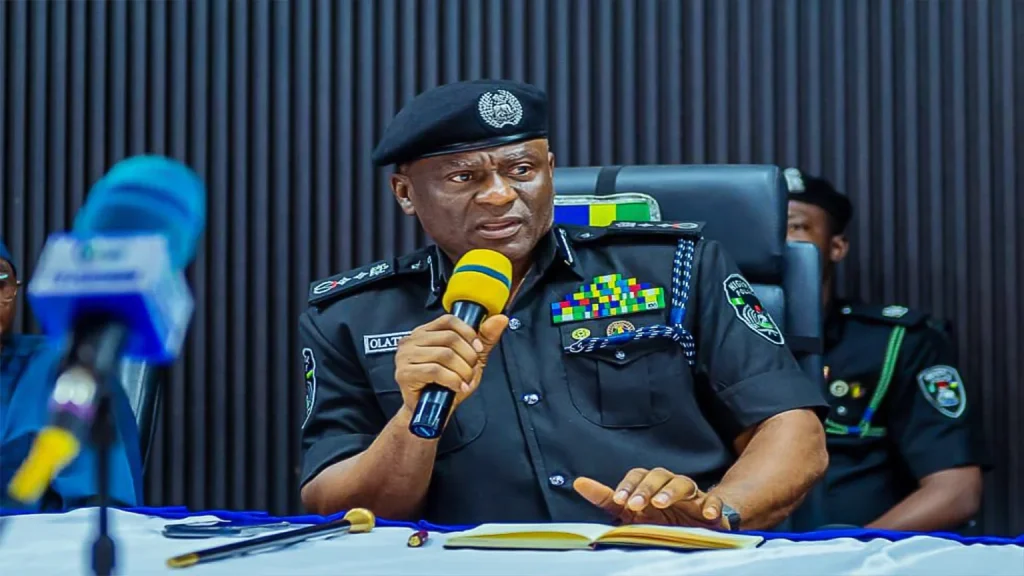
The Nigeria Police Force. Following massive online outrage over a bone-chilling video of an armed officer aggressively threatening the public, The Inspector General of Police (IGP) Tunji Disu has stepped in directly, ordering the immediate arrest, detention, and a comprehensive psychiatric evaluation of the rogue cop.
The internet erupted into absolute fury after the officer, identified as Assistant Superintendent of Police (ASP) Newton Isokpehi, posted an intense, three-minute tirade on TikTok. Holding a rifle and visibly agitated, Isokpehi—who claims to have served for 26 years—unapologetically vowed to gun down any Nigerian citizen who dares to film him or his team while they are performing stop-and-search duties on the road.
“Any day I’m on duty as an officer while holding my rifle, let someone video me. That oga who gave the order that police officers should be filmed, he will do your burial. I will kill anyone who films me on duty.”
— ASP Newton Isokpehi
To make matters worse, the rogue officer explicitly threatened that if a single passenger inside a commercial bus attempts to record him, he would “clear everybody down” without hesitation. The violent rant flatly defies a landmark Federal High Court ruling from earlier this year, which explicitly affirmed the constitutional right of all Nigerian citizens to record police personnel in public spaces to ensure transparency.
Though Isokpehi quickly scrambled to delete the rant and uploaded a frantic apology video claiming his outburst was fueled by deep professional frustration and anger, the damage was already done. Civil rights advocates and social media users tagged the police hierarchy relentlessly, calling the display a terrifying ticking time bomb for extrajudicial killings.
Acting under the strict mandate of the IGP, the Anambra State Police Command swiftly tracked down and arrested Isokpehi. Beyond standard disciplinary actions, the Force Headquarters has insisted on a full psychological and medical breakdown to determine his mental fitness to carry firearms. The decisive move has been heavily lauded by security analysts as a crucial step toward enforcing institutional accountability and weeding out emotionally unstable elements from national policing corridors.