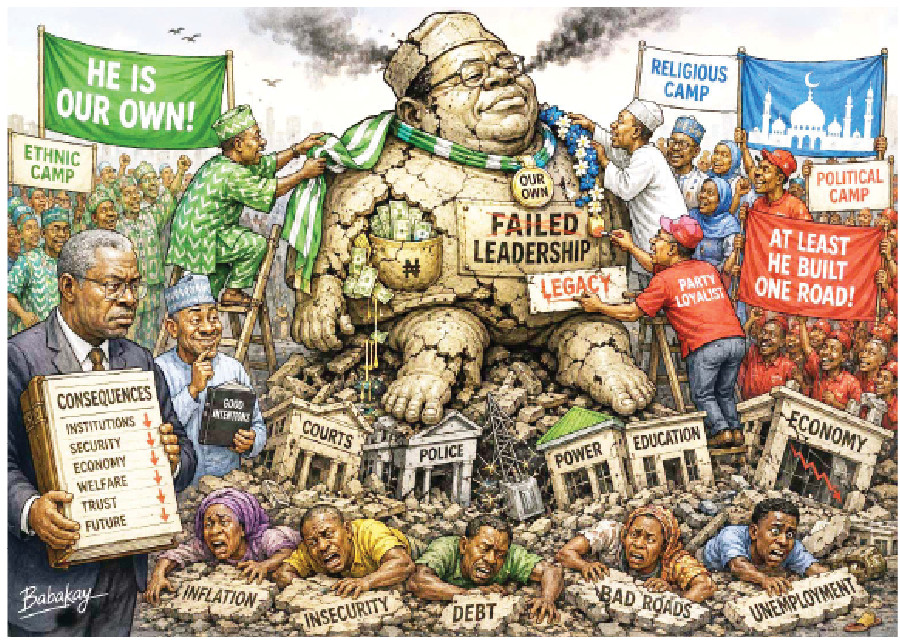
Growing concerns over leadership accountability have reignited public debate about what many observers describe as Nigeria’s tendency to celebrate or defend leaders despite poor performance in public office. Political analysts, civil society advocates, and governance experts argue that the continued admiration of leaders who fail to deliver on their promises weakens democratic institutions and reduces pressure for meaningful reforms. They contend that when public officials are praised without being held accountable for unmet commitments, poor governance becomes more difficult to address and citizens are less likely to demand improved service delivery. According to governance advocates, sustainable national development depends on a culture in which elected and appointed officials are assessed based on measurable achievements, transparency, and their ability to improve the lives of citizens. They stress that leadership should be judged by results in critical areas such as security, education, healthcare, infrastructure, employment, and economic management rather than political loyalty or personal popularity. Analysts also encourage citizens to become more actively engaged in democratic processes by demanding accountability, participating in public discourse, and making informed decisions during elections. They argue that stronger institutions, an independent media, and active civic participation are essential for promoting responsible governance and ensuring that public office holders remain accountable to the people they serve. While opinions differ on the performance of individual leaders, many stakeholders agree that constructive criticism and public oversight are fundamental to a healthy democracy. They believe that encouraging a culture of accountability instead of unquestioning loyalty will help strengthen democratic governance, improve public confidence in government institutions, and support long-term national progress. The ongoing discussion reflects a broader call for leadership built on integrity, competence, transparency, and measurable results that place the interests of Nigerians above personal or political considerations.