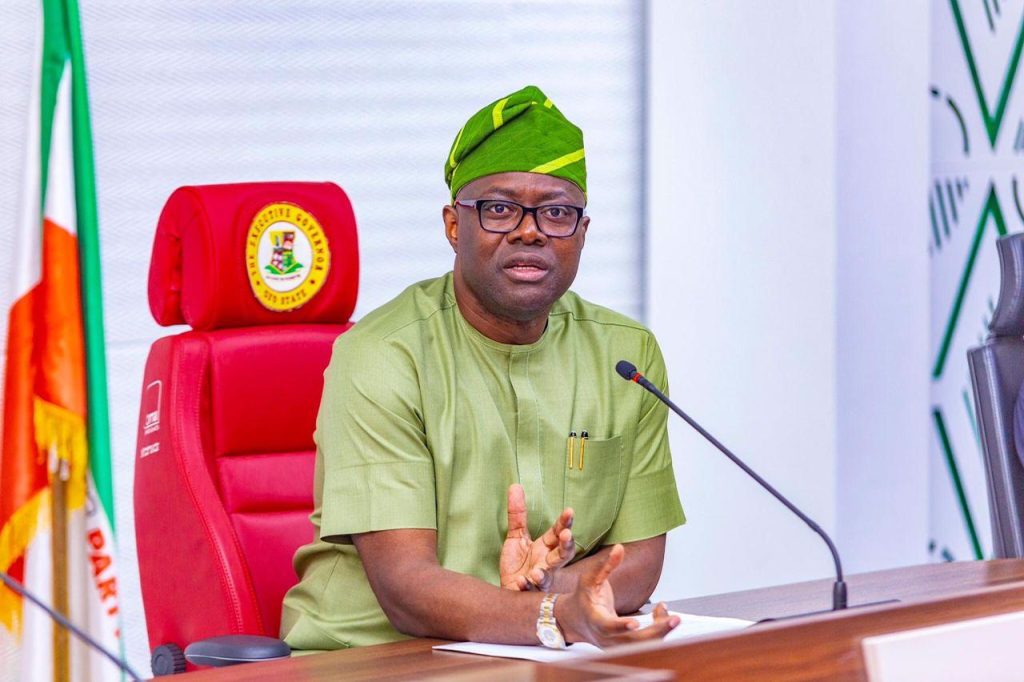
The political tension between Oyo State Governor Seyi Makinde and President Bola Tinubu appears to be getting hotter, as the governor has delivered another strong assessment of the current administration.
Makinde has rated Tinubu’s government just 34 per cent, suggesting that although the administration has recorded some progress, much more needs to be done to address the challenges facing ordinary Nigerians.
Speaking during an interview on ARISE News, the Oyo governor also expressed support for the establishment of state police, arguing that Nigeria needs a more effective security structure to tackle its growing insecurity challenges.
But that was not all.
Makinde also accused the Federal Government of allegedly using the Economic and Financial Crimes Commission (EFCC) to intimidate or pressure opposition governors into joining the ruling All Progressives Congress (APC).
The governor’s allegation has added another layer to the already heated political atmosphere ahead of the 2027 presidential election.
Makinde, who has emerged as one of the prominent voices challenging the ruling party, has also accused Tinubu of breaching a political understanding reached during the 2023 election period.
The governor’s position suggests that the disagreement between both political figures is no longer just about party differences but also about political trust, governance and the direction of the country.
His comments are particularly significant because Makinde has openly indicated his interest in challenging Tinubu in the 2027 presidential election.
The governor’s criticism is also likely to generate reactions from APC supporters, particularly those who believe the administration’s economic reforms are beginning to produce positive results.
However, many Nigerians will be more interested in the issues raised by Makinde than the political rivalry itself.
With rising living costs, insecurity, unemployment and economic uncertainty still dominating national conversations, the question remains whether the Federal Government can convince Nigerians that things are moving in the right direction.
As 2027 approaches, political exchanges like this are likely to become more frequent.
For now, Makinde has made his position clear, and the Presidency will be under pressure to respond to the allegations.