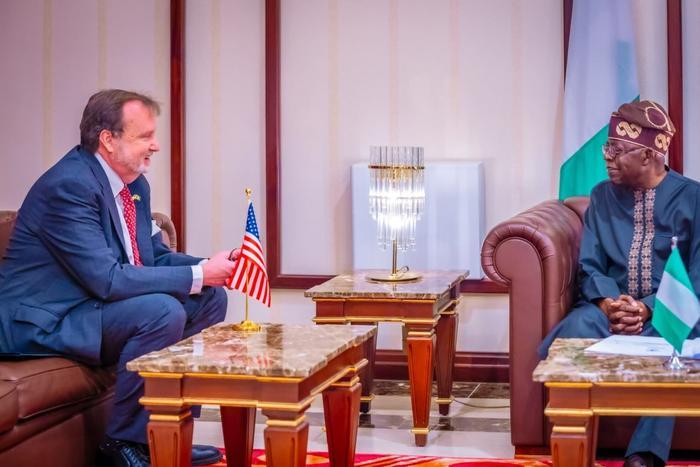
The controversy surrounding President Bola Tinubu’s recent interview with American political strategist Diana London has taken another interesting turn after the media personality publicly denied receiving $4.5 million from the Nigerian government.
The interview, which was conducted at the Presidential Villa in Abuja, has generated considerable public attention, with questions being raised about the circumstances surrounding the engagement and the reported payments connected to a lobbying arrangement.
London, who is the Chief Executive Officer of London Global Strategies, took to her X account to reject allegations that she personally received $4.5 million from Nigeria or anyone acting on behalf of the government.
She described the allegation as a smear campaign and maintained that her visit to Nigeria was to interview Tinubu for a documentary and experience the country firsthand.
Her response followed reports alleging that the Nigerian government had spent millions of dollars on the engagement.
However, the controversy is more complicated than a simple denial.
Documents filed under the United States Foreign Agents Registration Act reportedly show that London Global Strategies received payments of $375,000 from DCI Group, an American lobbying firm engaged by the Nigerian government through Aster Legal.
These payments were described as retainers for services under the lobbying arrangement.
London’s denial specifically concerns the allegation that she personally received $4.5 million from Nigeria. It does not, by itself, resolve questions surrounding the wider lobbying arrangement or the relationship between the interview and the services provided.
Former Vice-President Atiku Abubakar has also weighed in, demanding that the Presidency publish the relevant lobbying contract, disclose payments and invoices, and release the full, unedited recording of the interview.
The development has generated fresh political debate, particularly over transparency, government spending and the use of international media personalities to communicate Nigeria’s image abroad.
For now, Nigerians are waiting for further clarification from the Presidency.
And with the 2027 elections approaching, the controversy is unlikely to disappear from the political conversation anytime soon.