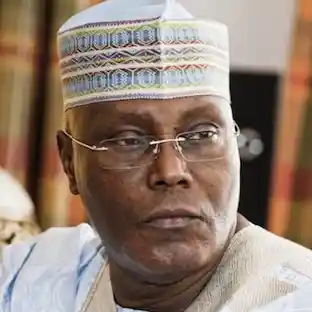
The latest World Bank report has delivered a sobering assessment of Nigeria’s economy, prompting former Vice President Atiku Abubakar to call for an urgent and deep scrutiny of federal revenue and expenditure.
The report, titled “Nigeria’s Tomorrow Must Start Today: The Case for Early Childhood Development,” released in mid-April 2026, highlights a “troubling paradox” where macroeconomic improvements are failing to reach the average household.
The Poverty Crisis in Numbers
The World Bank data reveals a steady climb in the number of Nigerians living below the poverty line over the last three years:
- 2023: 56%
- 2024: 61%
- 2025: 63% (Approximately 140 million people)
Despite a sharp decline in headline inflation—which dropped from 34.8% in late 2024 to 15.15% by December 2025—the report notes that real incomes have not grown fast enough to offset the cumulative impact of previous price shocks.
Atiku’s Charge to the National Assembly
Reacting to the data, Atiku Abubakar (speaking via his spokesperson Phrank Shaibu) labeled the current economic trajectory as a “monumental regression.”
- Scrutiny of Revenue: Atiku has urged the National Assembly to move beyond “rubber-stamp” approvals and conduct a forensic audit of federal revenues, particularly looking into how the gains from subsidy removals and currency devaluations are being utilized.
- The “Trial-and-Error” Critique: He argued that the rise in poverty to 63% is a direct result of “harshly implemented policies” executed without adequate social safety nets.
- Call for Transparency: The former VP emphasized that “leadership is not about defending failure; it is about correcting it,” demanding that the government prioritize job creation and food security over abstract macroeconomic indicators.
Structural Gaps Identified
The World Bank report also pointed to a structural imbalance in Nigeria’s growth. While the services and industry sectors have shown expansion, the agricultural sector—which employs over half of Nigeria’s poor—has lagged significantly behind. This gap is cited as a major reason why “disinflation” is not yet translating into “poverty reduction.”