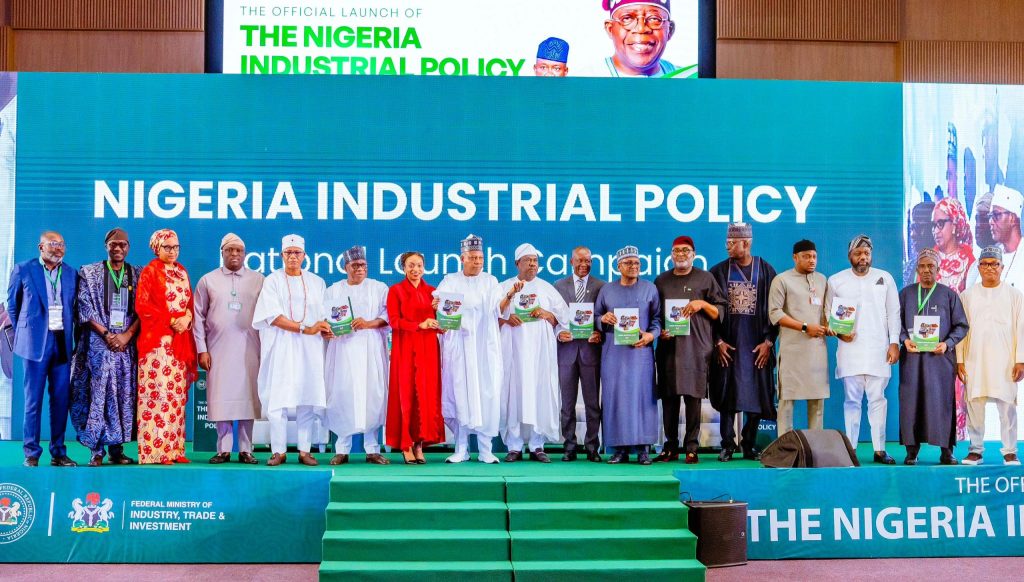
Nigeria is officially tired of sending its wealth abroad in crates and buying it back in boxes! In a power-packed ceremony at the International Conference Centre in Abuja, Vice President Kashim Shettima—standing in for President Bola Tinubu—unveiled the Nigeria Industrial Policy (NIP) 2025. This isn’t just another government document to gather dust; it’s being hailed as a “declaration of war” on the country’s dependence on raw material exports. For decades, we’ve been the world’s “raw material supermarket,” but the VP made it clear that the goal now is to turn Nigeria into Africa’s manufacturing engine room.
The plan is as ambitious as it gets. The government wants to move Nigeria away from simply digging up solid minerals or harvesting crops to sell them cheap. Instead, the focus is on value addition. Imagine Nigerian-made textiles, processed foods, and even tech gadgets leaving our ports with the “Made in Nigeria” stamp of excellence. VP Shettima emphasized that the success of this policy won’t be measured by fancy speeches, but by the “number of factories that open their gates at dawn” and the millions of jobs created for our vibrant youth.
Heavyweights like Aliko Dangote were in the room, and the message was loud and clear: “No power, no growth.” The policy acknowledges this reality, aiming to align energy and infrastructure directly with industrial needs. With the African Continental Free Trade Area (AfCFTA) in full swing, the government is betting big that this roadmap will prevent Nigeria from becoming a dumping ground for foreign goods. It’s a “production-centered” dream that, if executed right, could finally see the Naira gain some serious muscle. Abuja has spoken—now it’s time for the machines to start humming!