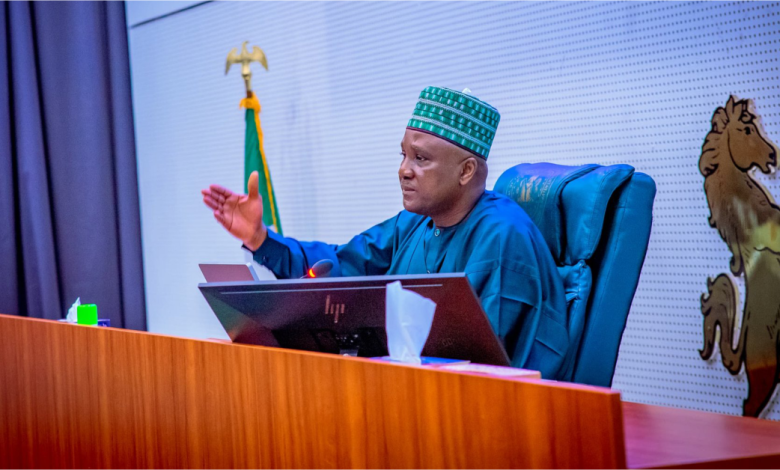
Nigeria’s debt situation has once again taken center stage, as the Speaker of the House of Representatives, Tajudeen Abbas, sounded a strong warning over the country’s rising debt burden. Speaking during the opening of the 11th Annual Conference and General Assembly of the West Africa Association of Public Accounts Committees (WAAPAC) at the National Assembly in Abuja on Monday, September 8, Abbas expressed deep concern that Nigeria’s debt profile has not only reached alarming levels but has also breached the statutory debt ceiling.
According to him, the figures paint a grim picture. As of the first quarter of 2025, Nigeria’s total public debt stood at N149.39 trillion (about US$97 billion). This represents a sharp increase from N121.7 trillion recorded the previous year, highlighting how fast the nation’s obligations are rising. Even more troubling is the debt-to-GDP ratio, which Abbas revealed now stands at 52 percent—well above the 40 percent statutory ceiling prescribed by Nigerian law.
“This development has pushed our debt profile to a critical point,” Abbas cautioned, stressing that such a breach of fiscal limits threatens the country’s long-term financial sustainability.
A Warning Signal for Fiscal Sustainability
The Speaker emphasized that the violation of the debt limit is not just a statistical detail but “a clear signal of strain on fiscal sustainability.” He warned that unless urgent reforms are undertaken, Nigeria could soon find itself struggling to meet essential obligations while devoting an unsustainable portion of its budget to debt servicing.
Abbas drew attention to the troubling trend across Africa where many governments are already spending more on repaying loans than on critical sectors such as healthcare, education, and social welfare. “This is not just a budgetary concern, but a structural crisis that demands urgent parliamentary attention and coordinated reform,” he added.
Borrowing Must Be Purpose-Driven
While acknowledging that borrowing is sometimes necessary to drive development, Abbas cautioned against reckless debt acquisition. He stressed that loans must be tied to impactful projects that can generate economic growth and improve the welfare of citizens.
“Borrowing should support infrastructure, health, education, and industries that create jobs and reduce poverty,” he said. “Reckless debt that fuels consumption or corruption must be exposed and rejected. Oversight is not just about figures, but about the lives and futures behind those figures.”
The Speaker warned that without strict discipline in borrowing practices, Nigeria risks sinking deeper into a debt trap, leaving future generations to bear the heavy burden of today’s financial mismanagement.
Strengthening Oversight and Transparency
Abbas highlighted the crucial role of parliament in preventing reckless borrowing and ensuring accountability in debt management. He reaffirmed the commitment of the 10th House of Representatives to strengthening oversight mechanisms under its Open Parliament policy.
As part of this initiative, major borrowing proposals would undergo public hearings to allow citizens and stakeholders to scrutinize the necessity, feasibility, and expected impact of such loans. Additionally, simplified debt reports will be made available to Nigerians to promote transparency and ensure that the public is fully informed about the country’s financial commitments.
According to Abbas, this approach is aimed at restoring public trust and ensuring that every borrowed naira translates into tangible development outcomes. “It is not enough to borrow; we must account for what the funds are used for and ensure that citizens see and feel the benefits,” he insisted.
A Call for Urgent Reform
The Speaker’s remarks at the WAAPAC conference underscore the urgency of reforming Nigeria’s borrowing practices. With debt growing at an alarming rate and already surpassing statutory limits, there is a clear need for stricter controls, better planning, and stronger collaboration between government institutions.
Abbas urged stakeholders, including the executive arm of government, development partners, and civil society, to work together to ensure that Nigeria’s borrowing is sustainable, targeted, and accountable. He emphasized that the country cannot afford to continue on its present trajectory, where rising debt threatens economic stability and undermines future growth.
In conclusion, Abbas’s alarm is both a wake-up call and a call to action. Nigeria’s debt burden, now at N149 trillion, is not just a financial figure—it is a pressing national concern that affects the country’s ability to provide healthcare, education, jobs, and infrastructure. Unless deliberate steps are taken to reform borrowing practices and enforce transparency, the debt crisis could deepen, leaving Nigeria with fewer options to chart a sustainable economic future.