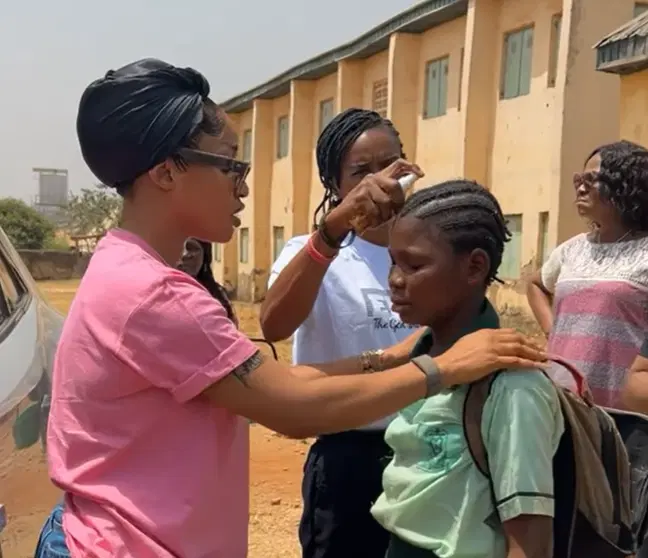
Actress-turned-evangelist Tonto Dikeh following her controversial “deliverance” session involving a secondary school student. A prominent human rights lawyer has officially filed a ₦200 million lawsuit against the actress at the Federal High Court, Abuja, today, Friday, March 13, 2026.
The suit stems from a viral video posted by Tonto on her social media pages last week, which showed her performing a spiritual deliverance on a minor during a school outreach. The footage, which depicted the young girl in distress and pinned to the ground, has sparked national outrage regarding child rights and digital privacy.
Key Allegations in the Suit:
- Violation of Dignity: The plaintiff argues that the “spectacle” of the deliverance subjected the minor to public ridicule and emotional trauma, violating her right to dignity as enshrined in the Nigerian Constitution and the Child Rights Act.
- Privacy Breach: The lawsuit claims that filming and broadcasting a minor in such a vulnerable spiritual state without verifiable parental consent—and for the purpose of “social media clout”—is a gross violation of privacy laws.
- The Demands: The lawyer is seeking ₦200 million in exemplary damages and a mandatory public apology to be published in at least three national dailies and on Tonto’s social media platforms.
Tonto’s Defiant Stance: Despite the mounting legal pressure, the actress appears undeterred. In a recent social media post following the news of the lawsuit, she remained focused on her “new calling,” stating that she will not be intimidated by “the kingdom of darkness.” She previously defended the session by claiming she was saving the girl from a “spirit of death.”
Industry Reactions: The case has polarized the public. While some religious supporters see the lawsuit as “persecution of the church,” many legal experts and child rights advocates, including the National Agency for the Prohibition of Trafficking in Persons (NAPTIP), have reportedly begun monitoring the situation. Critics argue that even “good intentions” do not exempt public figures from following legal protocols regarding the protection of children.