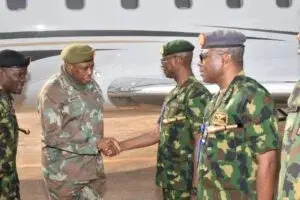
The Chief of the South African Army, Lieutenant General Lawrence Khulekani Mbatha, is currently on a high-level working visit to Nigeria. As of Thursday, March 12, 2026, the visit has already seen significant diplomatic and strategic breakthroughs aimed at creating a “unified African response” to modern security threats.
The visit kicked off at the Army Headquarters in Abuja, where Mbatha was received by the Nigerian Chief of Army Staff (COAS), Lieutenant General Waidi Shaibu. Both leaders emphasized that the collaboration is not just about diplomacy but about practical, “boots-on-the-ground” improvements in how both nations fight insurgency.
Key Highlights of the Visit:
- Aviation & Medical Training: Nigeria is particularly interested in leveraging South Africa’s advanced military aviation sector for pilot training and maintenance. Additionally, the COAS proposed sending Nigerian doctors to South Africa for specialized training in forensic pathology and trauma-related critical care.
- Counter-IED Expertise: The South African delegation expressed a keen interest in learning from Nigeria’s extensive “battlefield experience” in the North-East (Operation HADIN KAI), specifically in countering Improvised Explosive Devices (IEDs) and asymmetric warfare.
- Educational Exchange: The partnership is already active, with Nigerian officers currently studying at the South African Defence College, while South African instructors are serving at the Army War College Nigeria and the Armed Forces Command and Staff College (AFCSC) in Jaji.
- Kaduna Institutions Tour: On Wednesday, Mbatha visited the Nigerian Defence Academy (NDA) and the Defence Industries Corporation of Nigeria (DICON) in Kaduna. He praised the NDA’s “integrated curriculum” as a benchmark for South African military training.
This visit marks a “renewal of vows” between the continent’s two largest economies and military powers. By sharing intelligence, technical expertise, and training facilities, both nations hope to build a more resilient security architecture capable of handling the evolving tactics of terrorist groups across Africa.