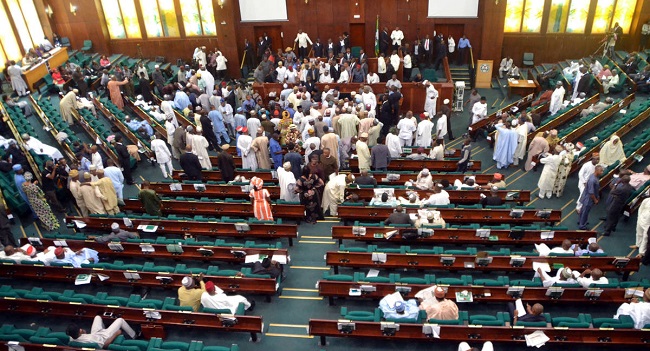
The House of Representatives has opened a sweeping investigation into the management of oil spill clean-up funds in the Niger Delta, vowing to expose mismanagement, ensure transparency, and deliver justice to communities long devastated by pollution.
Chairman of the ad hoc committee, Okpolupm Etteh, made the pledge on Thursday during an investigative hearing at the National Assembly Complex, Abuja.
The committee—recently inaugurated by Speaker Tajudeen Abbas —was mandated to probe the utilisation of funds earmarked for environmental remediation, assess the actual execution of clean-up projects, and identify systemic weaknesses in the institutions overseeing the process. It is also expected to interface with host communities, oil firms, and civil society groups before submitting recommendations to the House.
Speaking during the session, Etteh said the investigation would uncover how funds allocated to the Hydrocarbon Pollution Remediation Project (HYPREP) and similar interventions were managed.
“The House has mandated this committee to investigate the management of oil spill clean-up funds. Our goal is clear—to uncover the truth,” he said.
“We will scrutinise project implementation, procurement processes, training programmes, intelligence coordination, and the actual delivery of remediation and restitution to Niger Delta communities.”
Etteh stressed that the probe would go beyond financial audits to evaluate the performance of regulatory agencies, transparency in contract awards, and the extent of progress on remediation projects financed by the Federal Government and development partners.
“When monitoring and verification reveal gaps, delays, or irregularities, the committee will not hesitate to identify those responsible and recommend corrective measures. This is about ensuring that funds meant for environmental recovery are used effectively for the people who have suffered the most,” he added.
He further assured that all proceedings would be recorded for accountability and that witnesses appearing before the panel must present “factual testimonies, authentic documents, and verifiable evidence of work done.”
Etteh called on all government agencies involved in the clean-up to cooperate fully by supplying relevant information.
“These agencies include the Hydrocarbon Pollution Remediation Project, the Nigerian Upstream Petroleum Regulatory Commission, the National Oil Spill Detection and Response Agency, the Federal Ministry of Finance, and other related entities,” he said.
In his remarks, Speaker Tajudeen Abbas reaffirmed the House’s determination to ensure that the people of the Niger Delta receive justice and that every kobo allocated for environmental recovery is properly utilised.
“Our parliament conducts legislative activities to ensure that public funds are not only spent, but are spent efficiently for the good of all,” Abbas stated.
“This investigation will help us determine who manages these funds, how they are applied, which communities benefit, and whether transparency and accountability were maintained throughout the process.”
Represented by the Chief Whip, Usman Kumo, the Speaker urged all concerned agencies to honour the committee’s summons and present full documentation.
“We appeal to the agencies concerned to appear before this committee with the necessary information that will enable it to make fair, balanced, and just recommendations. The House will continue to provide legislative oversight to ensure that the goals of the oil spill clean-up are achieved in a transparent and impactful manner,” Kumo said.
However, in a development that stirred debate at the hearing, Emmanuel Mac Jaja, a director with the Nigerian Upstream Petroleum Regulatory Commission (NUPRC), expressed strong opposition to the proposed establishment of a National Commission for the Decommissioning of Oil and Gas Installations.
According to Jaja, the plan was “unnecessary, duplicative, and contrary to international best practices,” warning that it could discourage investment in Nigeria’s oil and gas industry.
He explained, “The Petroleum Industry Act 2021 already empowers the NUPRC and the Nigerian Midstream and Downstream Petroleum Regulatory Authority to manage decommissioning activities in their respective sectors, and these responsibilities are currently being discharged competently.”
The ongoing investigation is expected to shed light on how billions of naira allocated for clean-up operations in the Niger Delta have been managed, amid growing frustration from residents who say the region remains heavily polluted despite years of government intervention.