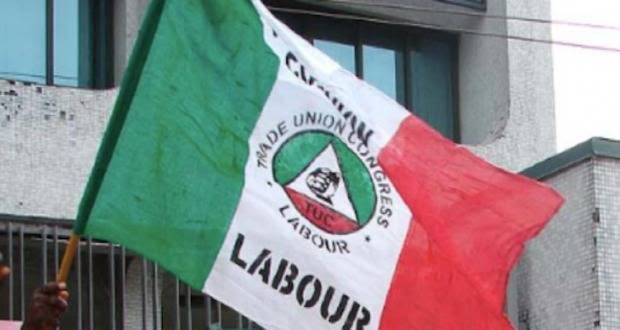
The Nigeria Labour Congress, NLC, has reacted to the decision by President Bola Tinubu to consult further before arriving at a final decision on the new national minimum wage for Nigerian workers.
The General Secretary of the union, Emmanuel Ugboaja, who spoke on behalf of the group said the Federal Government has the right to consult whoever it wants to consult, saying what was clear is the fact that the era of paying slave wages is gone.
“We are waiting for them. One thing is clear and that is the era of paying slave wages is gone.
‘’As workers, we cannot be slaves or live in a slave camp in our country. The workplace is about tripartism. In the world of work today, the global practice is tripartism. That is the government, the employers and the workers.
“Nigeria cannot be different in the comity of nations. So, the era of slaves and slave camps is gone for good. So, we are waiting for them to consult and take decision.”
Meanwhile, the Director-General of the Nigeria Employers Consultative Association, NECA, Adewale Oyerinde, has warned that any approval of new national minimum wage above N62,000 would cause crisis and lead to job losses.
He said this on the sidelines of the Third Nigeria’ Employers Summit on “Economic Renaissance: Harnessing Government Reforms and Private Sector Agility,” in Abuja yesterday, said it is painful to accept the N62,000 and that it was based on a certain premise.
Asked whether he was satisfied with the waiting game on the national minimum wage, he said: “There’s no waiting game and I think we have to put all this in context. And all this misinformation, I think we are just creating unnecessary tension.
‘’There’s a process and we don’t seem to be on the same page. There’s a process of the tripartite committee sitting to recommend the national minimum wage.
“Once the minimum wage figures are recommended, we pass it to the president, which we have done. And the president is the sovereign. They have to pick the recommendation of the committee; do I accept it or I don’t accept it?
“The President remains the sovereign. That position is not contested, the employers cannot contest it.
“We cannot put a gun in somebody’s head and say, look, you have to do this, it’s tomorrow, you have to do it. It doesn’t work like that. Now, for us, and we have said it and we’ll say it again openly, the N62,000 the employers came up with was based on a premise.
“It was painful conceding that we did. And it was based on a certain premise. And one of those, or two of those, or three of those is the new electricity tariff, the government has to suspend it. That is one. That there should be an embargo on the introduction of new taxes.
“This speaks to the National Assembly as we speak. I hear the representative of the speaker saying he’s going to declare open a public hearing on CSR.
“It’s not a part of the issues we had. The House wants to legislate on CSR to make it compulsory. It is corporate social responsibility for God’s sake.
“It’s the prerogative of the business to say this is what I want to do. So you don’t legislate it. It’s another tax which we are also going to contest.
“So those are part of the conditions we gave for us to agree on the N62,000 minimum wage. Now, if it goes above N62,000, you have created two or three different dynamics. One, you have set the tone for non-compliance.
“That is one. Because if I cannot pay, I just can’t pay. Now, you have created a problem for the judiciary. All employees who are not satisfied have the right, according to the Act, to go to the National Industrial Court, NIC.
“Now, imagine 1,000, 2,000 employees, 5,000 employees across the country going to the National Industrial Court. How long will the Industrial Court take to dispense almost 5,000 cases? That is one.
“Two, you have also set in the process another dangerous pattern. We already have businesses leaving now.
All of us are not interrogating where our brothers and sisters working in those companies will go to? Where are they? So, a figure beyond what the private sector can pay may also lead to a loss of jobs.
“Now, we complain about insecurity. So, we have to put all those together. And a fundamental, lastly for me, on this minimum wage issue, a fundamental element in setting up a national minimum wage that you cannot take away is the ability to pay. If you take away the ability to pay, then you have just set a crisis stage.”