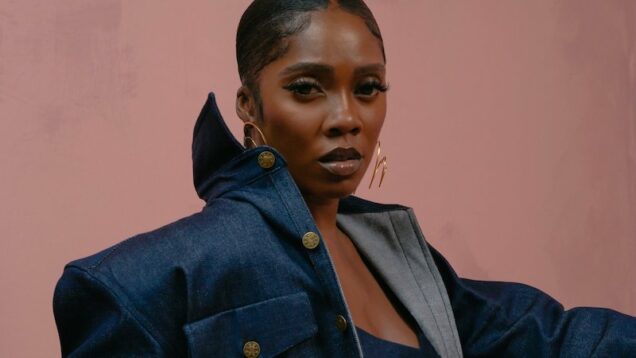
Nigerian music superstar, Tiwa Savage, has once again opened up about her feelings toward the “Queen of Afrobeats” title that many fans and media outlets have attached to her name over the years. While she acknowledges the admiration that comes with such a label, Tiwa admits that the crown is not one she feels comfortable wearing, insisting that several other female artists equally deserve recognition in the genre.
Speaking in a candid conversation with Apple Music host Ebro, the award-winning singer made it clear that although she values the respect behind the title, it is not one she wishes to embrace.

“Yeah, they call me the Queen of Afrobeats, but there are a lot of us that are Queens,” Tiwa explained. “Personally, I don’t like that tag, it’s uncomfortable because I feel like if I start accepting it, then I have to carry that weight, and it puts unnecessary pressure on me.”
According to Tiwa, such titles often elevate one artist while unintentionally sidelining others who are equally pushing boundaries and making significant contributions to the global Afrobeats movement. She stressed that the genre is filled with talented women who are breaking records, making history, and carrying African music to the world stage, and it would be unfair to diminish their impact with one overarching crown.
The mother of one further explained that while she understands why people may associate the title with her, she does not want to be defined by it. “It doesn’t make sense to me, so I don’t accept it,” she said. “But I appreciate the love and the recognition. It means a lot that people see me that way, but it’s not something I’m comfortable carrying.”
Tiwa went on to note that the “Queen of Afrobeats” label most likely stuck because of her role as one of the early female artists to break through in Nigeria’s male-dominated music industry. Her career, which has spanned over a decade, saw her blaze trails at a time when women struggled to get the same visibility and support as their male counterparts.
“I didn’t come up with it,” she clarified. “I think it’s just because I was one of the first female artistes in Nigeria to break through on a major level. I do appreciate that, and I’m not taking it for granted.”
Indeed, Tiwa’s journey in music is one marked by resilience, creativity, and groundbreaking achievements. From her early beginnings as a backup vocalist for international stars like George Michael and Mary J. Blige to her return to Nigeria where she redefined Afrobeats with hit singles such as Kele Kele Love, Eminado, and All Over, Tiwa has remained a central figure in shaping the sound of contemporary African music.
Her influence goes beyond her chart-topping hits. Tiwa Savage has also been a global ambassador for Afrobeats, performing at major international festivals, collaborating with world-renowned acts like Beyoncé, Brandy, and Wizkid, and even headlining concerts at iconic venues such as London’s O2 Arena. These accomplishments have solidified her place as one of the most recognizable African artists worldwide.
However, despite these achievements, Tiwa emphasizes humility and inclusivity. For her, music is not a competition for crowns but a collective movement that thrives when more voices are celebrated. She highlighted that the success of Afrobeats today is a result of contributions from both male and female artists, each bringing their unique stories and sounds to the global stage.
Her statement resonates in an industry where female artists have historically struggled for equal recognition. Today, the likes of Tems, Ayra Starr, Yemi Alade, and Amaarae are carrying the torch forward, proving that Afrobeats is not just dominated by men but enriched by powerful female voices. Tiwa’s acknowledgment of this new wave underscores her commitment to celebrating the collective rather than monopolizing the spotlight.
In many ways, Tiwa Savage’s refusal to embrace the “Queen of Afrobeats” crown reflects her deeper philosophy about artistry. For her, music is about authenticity, humility, and connection, not about titles that may create divisions or unrealistic expectations. While fans may continue to shower her with the label, Tiwa remains focused on creating timeless music and opening doors for others.
Her words serve as a reminder that greatness in music is not measured by crowns or titles but by the impact an artist makes on listeners, the industry, and the culture at large.