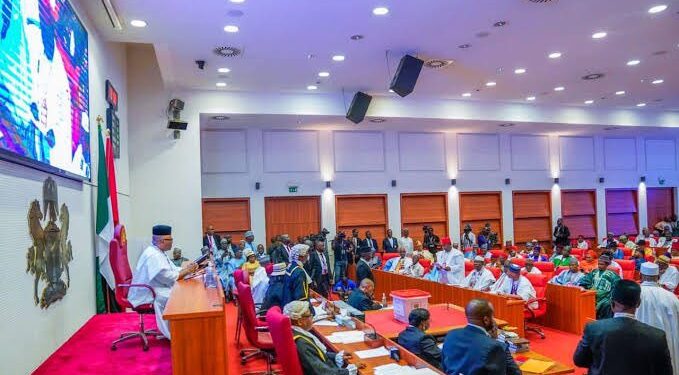
The Nigerian Senate chamber was the scene of intense political maneuvering and a sharp personality clash on Tuesday, May 5, 2026, as lawmakers moved to consolidate power ahead of the 11th National Assembly.
In a move that critics have dubbed a “legislative coup” against political outsiders, the Senate amended its standing rules to ensure that only the most senior, returning lawmakers can hold leadership positions.
The “Two-Term” Lockdown
The amendments to Orders 4 and 5 of the Senate Standing Rules have fundamentally changed the eligibility criteria for the 2027 leadership race:
- Presiding Offices: To contest for Senate President or Deputy Senate President, a lawmaker must now have served at least two terms (eight years), with the most recent term being the immediate preceding one (the 10th Senate).
- Principal Offices: For roles like Senate Leader or Chief Whip, the requirement is even stricter. A senator must have served two consecutive terms immediately preceding their nomination.
- The Impact: This effectively bars any “fresh” (first-term) senator from leadership. It also shuts out heavyweight returnees like Hope Uzodinma, Ifeanyi Okowa, or Ovie Omo-Agege, who may win seats in 2027 but would not meet the “consecutive term” requirement.
The Akpabio-Oshiomhole Face-Off
The session was far from orderly, marked by a 15-minute disruption as Senator Adams Oshiomhole (Edo North) openly challenged Senate President Godswill Akpabio.
- The Dispute: Oshiomhole raised a point of order, arguing that the resolutions being read by Akpabio did not reflect what was actually agreed upon during the three-hour closed-door session. “This was not what we agreed!” Oshiomhole reportedly shouted before his microphones were cut.
- The Overrule: Akpabio repeatedly rebuffed Oshiomhole’s attempts to intervene, eventually pushing the amendments through via a voice vote.
- The “Insider” Narrative: The clash highlights a deep rift between the “leadership bloc” looking to secure their influence beyond 2027 and independent-minded senators who view the move as a breach of democratic inclusivity.
Other Notable Rule Changes
Beyond the leadership lockout, the Senate introduced several “lifestyle” and procedural updates:
- Hydration Rule: A new provision in Section 55(11) now officially allows presiding officers and nominees undergoing screening to drink water during plenary sessions.
- Sitting Times: Plenary will now strictly run from 11:00 AM to 3:00 PM on Tuesdays, Wednesdays, and Thursdays to boost productivity.
- Suspension Protocol: Rules were tightened on suspended senators, who must now immediately withdraw from the chamber as directed by the Senate President